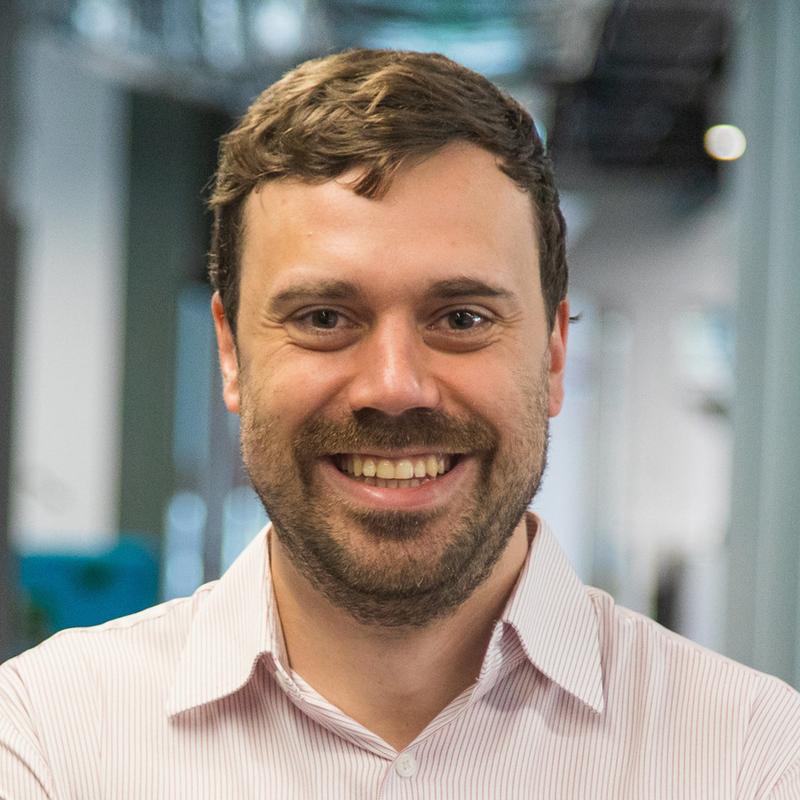
Profile picture

Dr Tobias Fischer

ARC DECRA Fellow, Senior Lecturer (US: Associate Professor) and Chief Investigator
Queensland University of Technology
I am a Senior Lecturer (US: Associate Professor) and ARC DECRA Fellow at the Queensland University of Technology. My research focuses on robot localisation and underwater perception, blending neuroscience and robotics to push the boundaries of intelligent systems operating under resource constraints. To date, I have secured over $3M in competitive funding and currently serve as Chief Investigator of the $1.3M Reef Restoration and Adaptation Program and the $700k Queensland Quantum Technologies Talent Building Program, with previous grants from Intel Labs and Amazon. After obtaining my PhD from Imperial College, I have published over 50 papers in prestigious venues including Science Robotics, PAMI, TRO, CVPR, ECCV, ICCV, IJCAI, ICRA, and IROS. Recognition for this work includes the UK Best PhD in Robotics Award and several best paper and best poster awards. I serve as an Area Chair / Associate Editor for leading conferences (ICRA/IROS/RSS) and journals (RAL). As co-chair of the IEEE-RAS Women in Engineering Committee, I actively promote gender diversity in STEM. My PhD students have gone on to successful careers as Assistant Professor, Research Scientists, and Research Fellows.
Contact Me:  

Featured Videos

ICRA 2025 Keynote – Visual Place Recognition

My ICRA 2025 keynote explores Visual Place Recognition (VPR) using bio-inspired, low-power sensing. I discuss neuromorphic event-based cameras, spiking models for localisation, and coral-reef applications within the Reef Restoration and Adaptation Program.

How Robots Navigate Without GPS Using Vision

A one-minute public-facing video explaining how robots use only visual cues to navigate in GPS-denied environments such as indoors, underground, and underwater. Read the article.

Robotic Vision That Works in the Real World

My talk at the MIT Robotics Worldwide Workshop covers neuromorphic place recognition, underwater perception for reef restoration, and open-source robotics tools such as RoboStack and ROS2WASM. I discuss how neuromorphic computing enables robust operation where GPU-based methods are impractical.